octokeyz
Hardware Variant: octokeyz
The basic variant of the octokeyz macropad, featuring eight 12mm SPST push-buttons and a single indicator LED. It shares a single firmware binary with the octokeyz-mega variant.
Overview

octokeyz, assembled
| Field | Value |
|---|---|
| MCU | STM32F042K6 / STM32F042K4 (ARM Cortex-M0, 48 MHz) |
| Buttons | 8x 12mm SPST push-buttons |
| LED | PWM-driven, 5 states (on, flash, slow blink, fast blink, off) |
| Display | None |
| USB | Mini-B, Full-speed, HID class, up to 100 mA |
| USB VID:PID | 1d50:6184 |
| PCB revision | 20240616 |
| License | CERN-OHL-S-2.0 (hardware) / BSD-3-Clause (firmware) |
PCB
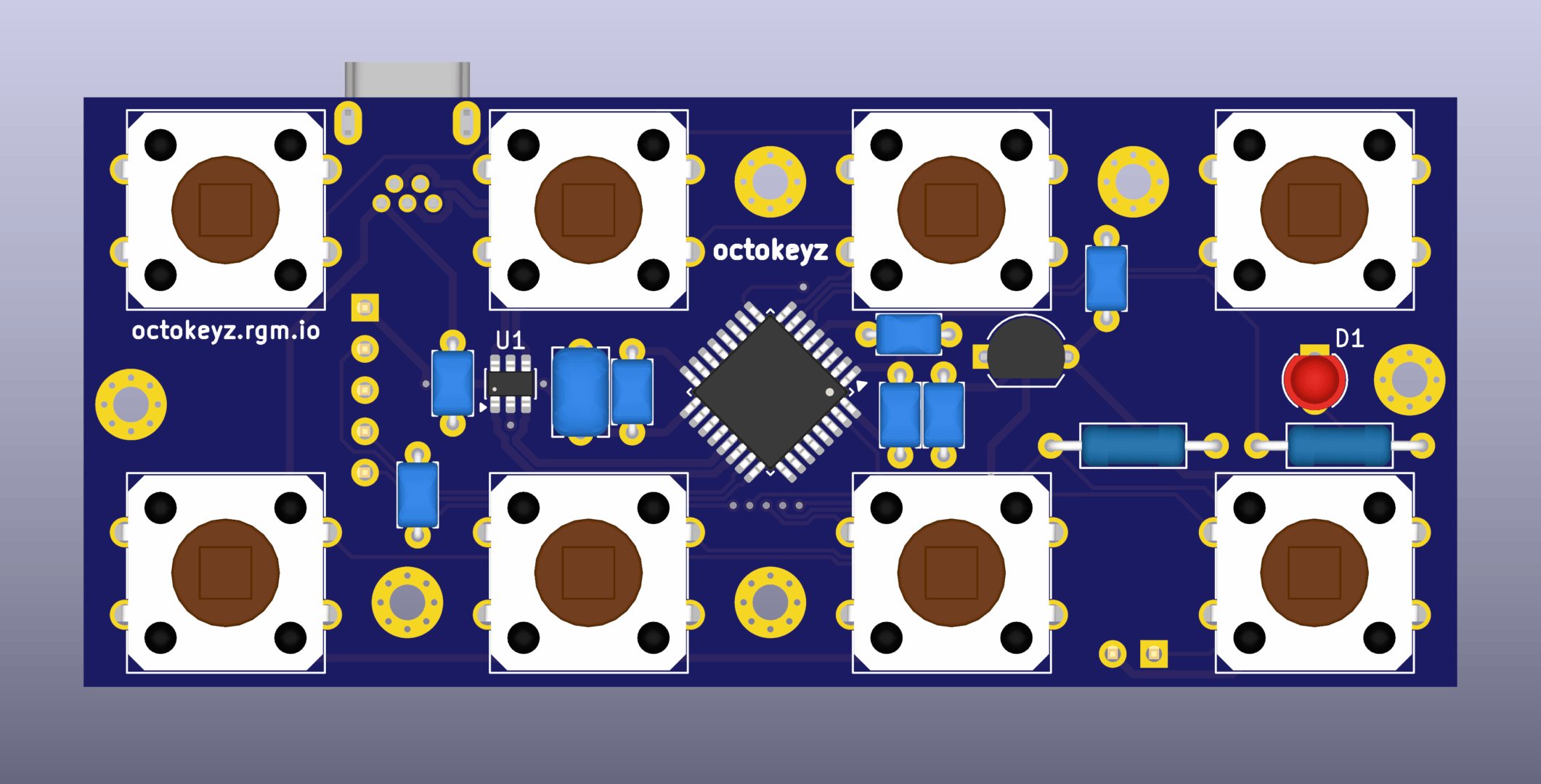
octokeyz PCB, top side
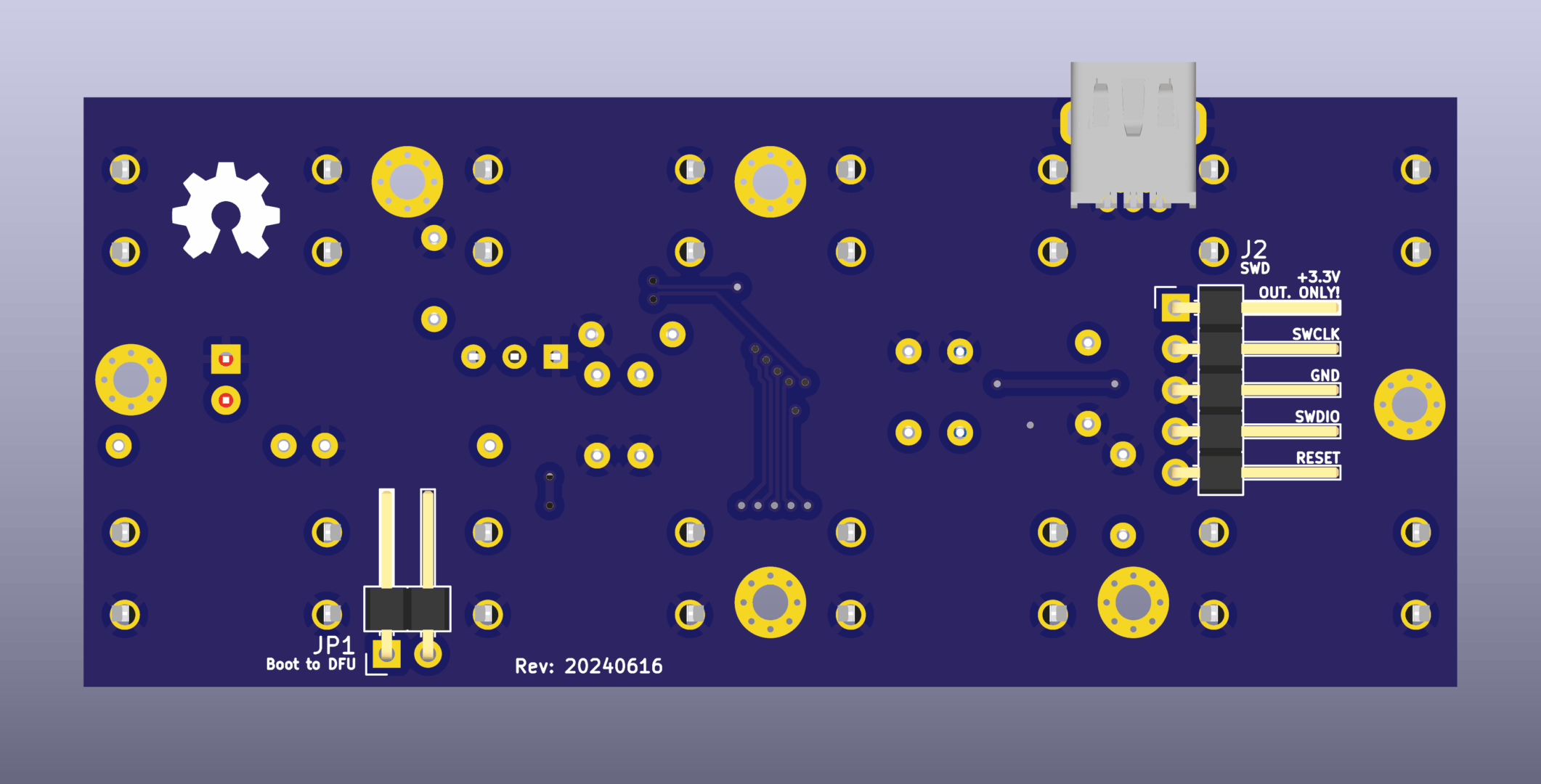
octokeyz PCB, bottom side
Resources:
KiCad 9.0+ source files are available in the repository under pcb/octokeyz/.
Enclosure
3D-printable enclosure designed in OpenSCAD, consisting of three parts:
| Part | File |
|---|---|
| Front shell | enclosure-front.stl |
| Back cover | enclosure-back.stl |
| LED holder | led-holder.stl |
OpenSCAD source files are in the repository under 3d-models/octokeyz/, with shared modules in 3d-models/lib/.
Display
This variant does not include a display. The firmware detects display absence at runtime and operates normally without one. For the display-equipped variant, see octokeyz-mega.
Build Manual
The board uses predominantly through-hole components, with SMD parts limited to the microcontroller and the USB ESD protector. The LED holder is a 3D-printed part that holds the LED, so that it clips into the front enclosure opening.
For the full assembly procedure, see my generic Hardware Build Manual.
- For firmware flashing instructions, see Firmware.
- For writing programs to interact with the device, see Client Libraries.